

An e-bike battery is expensive, but many range problems start with ordinary riding and storage habits.
Correct these mistakes before assuming the battery has failed.
> Safety note: Follow the instructions for your exact e-bike, battery, and charger. Stop using a battery that is damaged, recalled, unusually hot, swollen, leaking, hissing, or producing an unusual odor, and contact the manufacturer or a qualified shop. Do not open or repair a lithium-ion battery pack yourself.
1. Starting Every Ride in the Highest Assist Mode

Maximum assist is useful for a steep start, heavy load, or difficult traffic situation. Using it for every flat mile asks the motor to provide more of the work than necessary.
Start in a lower mode when conditions allow and add assistance when the route demands it. The goal is not to avoid the motor; it is to spend battery energy where it improves the ride most.
2. Grinding Up Hills in a Hard Gear
A hard gear forces a low pedal speed and high torque on a climb. The rider, chain, cassette, motor, and battery all work harder than they need to.
Shift to an easier gear before the slope becomes severe. Keep the pedals turning smoothly and let the motor operate in a more efficient range. Delaying the shift can also load the chain during the gear change.
3. Pedaling at a Very Low Cadence
Bosch advises that cadence and correct gear choice affect range, and its current guidance identifies roughly 60 to 90 revolutions per minute as an efficient range for its systems. Your exact drive may differ.
If every pedal stroke feels like a slow leg press, use an easier gear. A comfortable, steady spin often uses the motor more efficiently than pushing a large gear.
4. Riding With Soft Tires
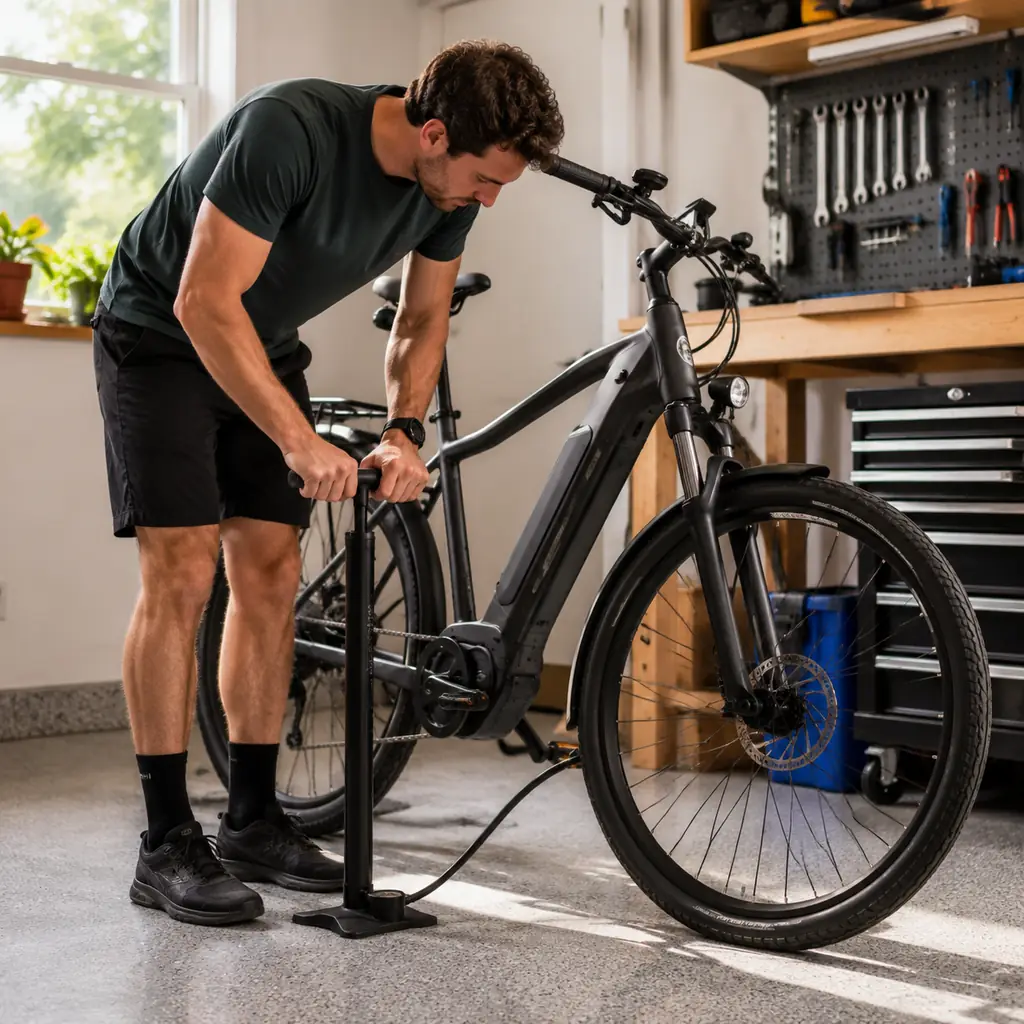
Low pressure increases rolling resistance and can make a heavy e-bike feel sluggish. It also raises the chance of rim strikes or pinch damage on some tire-and-tube setups.
Check pressure with a gauge, not only a thumb. Use the tire and bicycle maker’s approved range, then adjust for rider weight, tire width, terrain, and comfort. Do not exceed the marked limit simply to chase range.
5. Ignoring Brake Rub
A rotor or pad that drags quietly turns battery energy into heat. The loss may be small on a short ride but noticeable across a hilly day with many wheel rotations.
Lift each wheel and spin it during a routine check. A brief sound at one point may indicate alignment or rotor issues; continuous resistance deserves attention from a competent mechanic.
6. Letting the Drivetrain Get Dirty and Dry
An e-bike can place substantial load through its chain and gears. Grit, corrosion, and poor lubrication add friction and can accelerate wear.
Clean and lubricate the chain with a product suited to the conditions. Wipe away excess lubricant so it does not collect more dirt. Replace a worn chain before it damages costlier chainrings or cassette cogs.
7. Carrying Weight You Never Use
Every unnecessary lock, tool, bottle, and “just in case” item asks for energy on each climb and acceleration. The effect grows on stop-start routes.
Keep safety essentials, then audit what returns home untouched. CTO’s survey of touring-bike and gear weight shows how quickly small choices become a heavy load.
8. Trusting the Range Number as a Promise
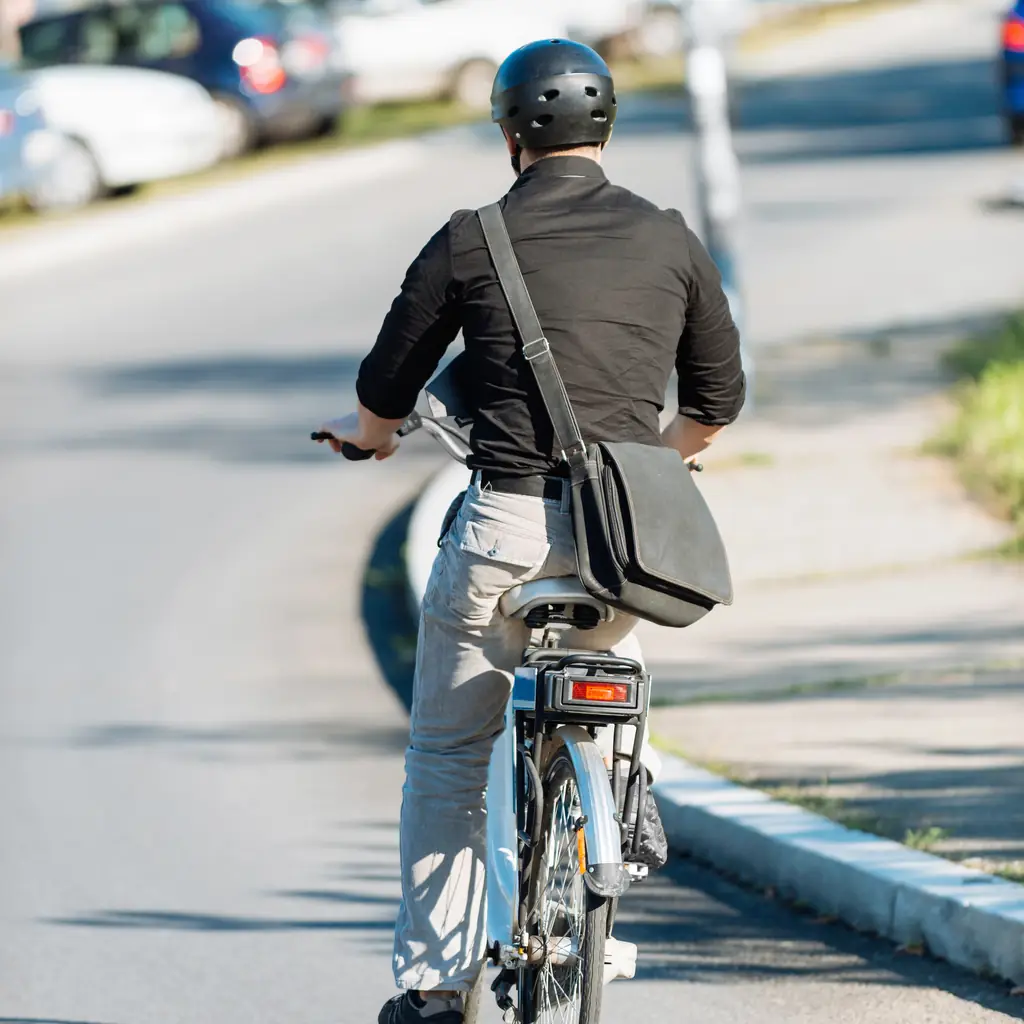
The display estimates range from recent use and the information available to the system. Hills, wind, temperature, rider effort, assist mode, surface, and luggage can change the result.
Treat the number as a moving estimate. Build a reserve into remote rides and watch how quickly the estimate changes after the first major climb.
9. Ignoring Headwinds, Hills, and Loose Surfaces
A flat mileage total hides the cost of a headwind, repeated climbing, mud, deep gravel, or soft sand. These conditions increase resistance and can use assistance faster.
Study elevation, surface, and wind direction before leaving. Riders choosing a mixed-surface setup can compare the tradeoffs in CTO’s guide to gravel bikes for touring.
10. Repeated Hard Starts and Stops
Frequent acceleration demands more energy than steady riding, much like stop-start driving. Racing away from every light in maximum assist can shrink the remaining range faster than expected.
Choose a smooth start when traffic permits. Look ahead, ease off before predictable stops, and select a route with fewer interruptions when range matters more than speed.
11. Forgetting That Cold Weather Temporarily Reduces Range
Lithium-ion battery performance can fall in cold conditions because internal resistance rises. A familiar summer route may therefore use a larger share of the display in winter.
Follow the manufacturer’s temperature guidance. Bosch recommends storing and charging its batteries at room temperature in cold weather and fitting the battery shortly before the ride. Do not invent a heating method or place the battery near a heater.
12. Leaving the Battery in a Hot Car
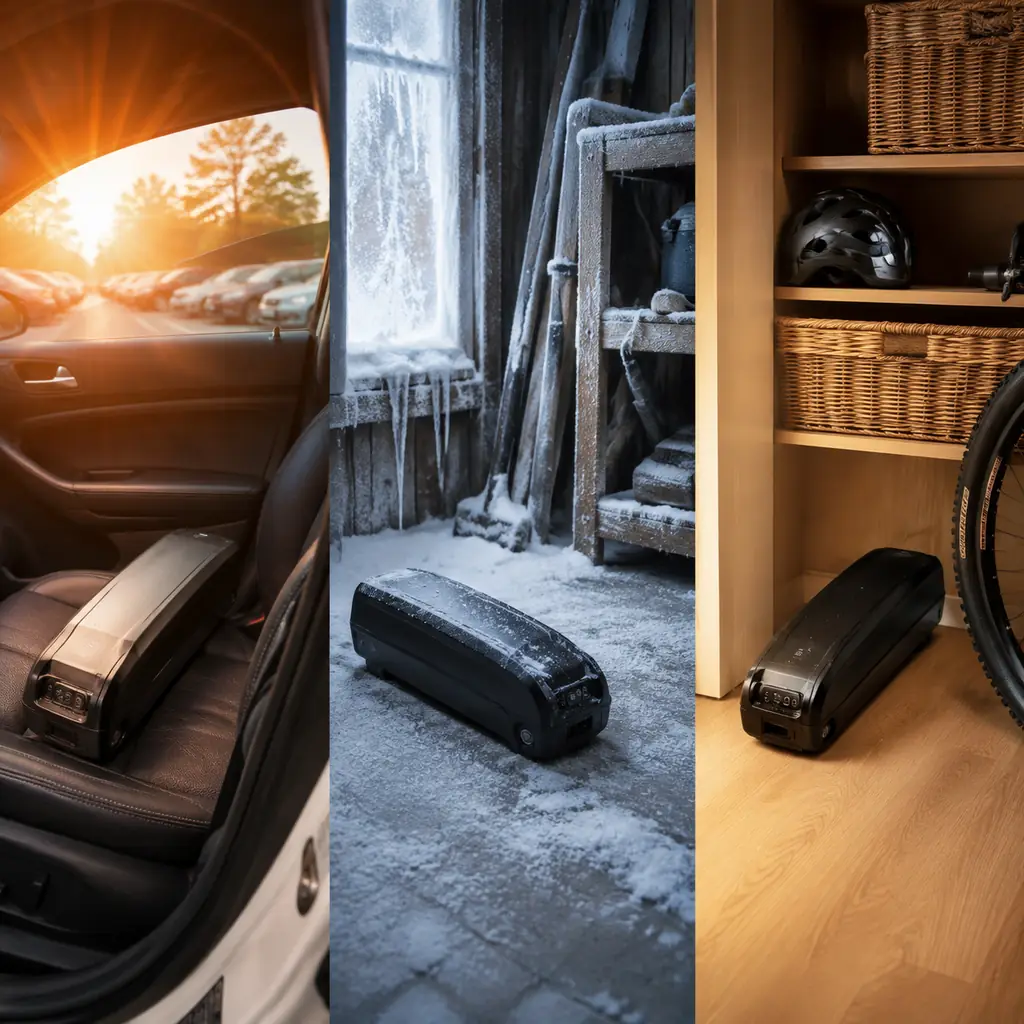
A parked car can become much hotter than the outside air. Heat is unfriendly to lithium-ion cells and may exceed the battery’s storage limits.
Remove a detachable battery when the bicycle will sit in a hot vehicle. Store it in a dry, temperature-controlled place within the manufacturer’s limits, and protect the contacts during transport.
13. Charging a Battery That Is Still Very Hot or Cold
A battery may need time to return to an approved charging temperature after a hard ride, direct sun, or freezing conditions. Plugging it in immediately can delay charging or conflict with its manual.
Move the battery to a dry, appropriate location and let its temperature stabilize. Use the indicator or app instructions for your system rather than estimating by touch alone.
14. Storing the Battery in an Unconditioned Shed
Sheds and garages can swing from freezing nights to extreme afternoon heat. Moisture and condensation create another problem around contacts and chargers.
Use a dry indoor location when the manufacturer’s instructions allow it. Keep the battery away from combustible clutter, direct sun, children, pets, and anything that can strike or crush it.
15. Storing the Battery Completely Empty
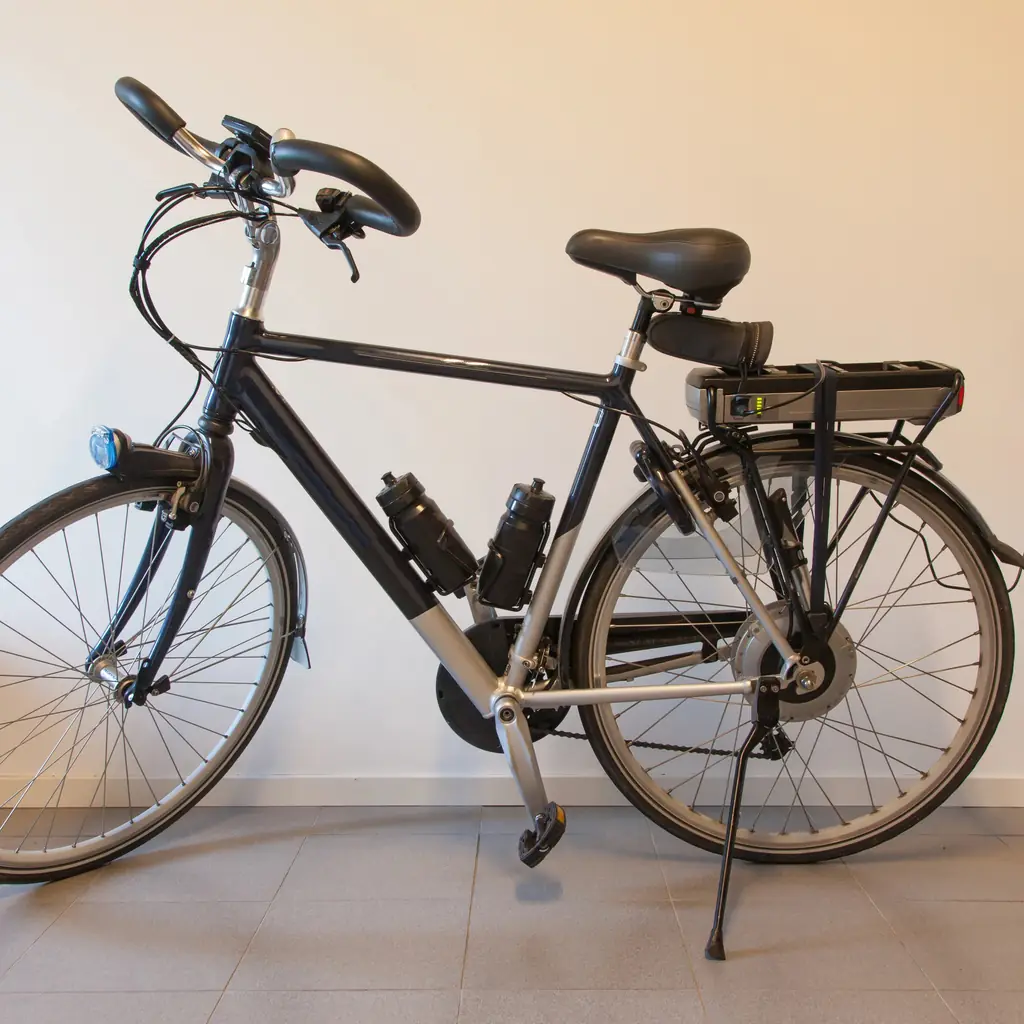
A deeply discharged battery can continue to lose charge while sitting. Some manufacturers warn that leaving it empty can cause deterioration or make the pack unusable.
Recharge according to the manual before long storage. If the system has a dedicated storage mode or recommended charge range, use it instead of guessing.
16. Leaving It at Full Charge for a Long Storage Period
The best storage level is system-specific. Bosch has advised approximately 30% to 60% for lengthy storage on some batteries, while Shimano guidance for certain systems uses approximately 70%.
That difference is the point: follow the current manual for the exact pack. A generic internet percentage should not replace model-specific instructions.
17. Forgetting to Check It During the Off-Season
Months pass quickly, and a stored battery can slowly discharge. A pack left untouched from autumn to spring may fall outside the maker’s intended storage routine.
Set a calendar reminder based on the manual. Check the charge, room conditions, casing, and contacts without opening the pack. If anything looks abnormal, stop and ask an authorized dealer.
18. Using the Wrong Charger
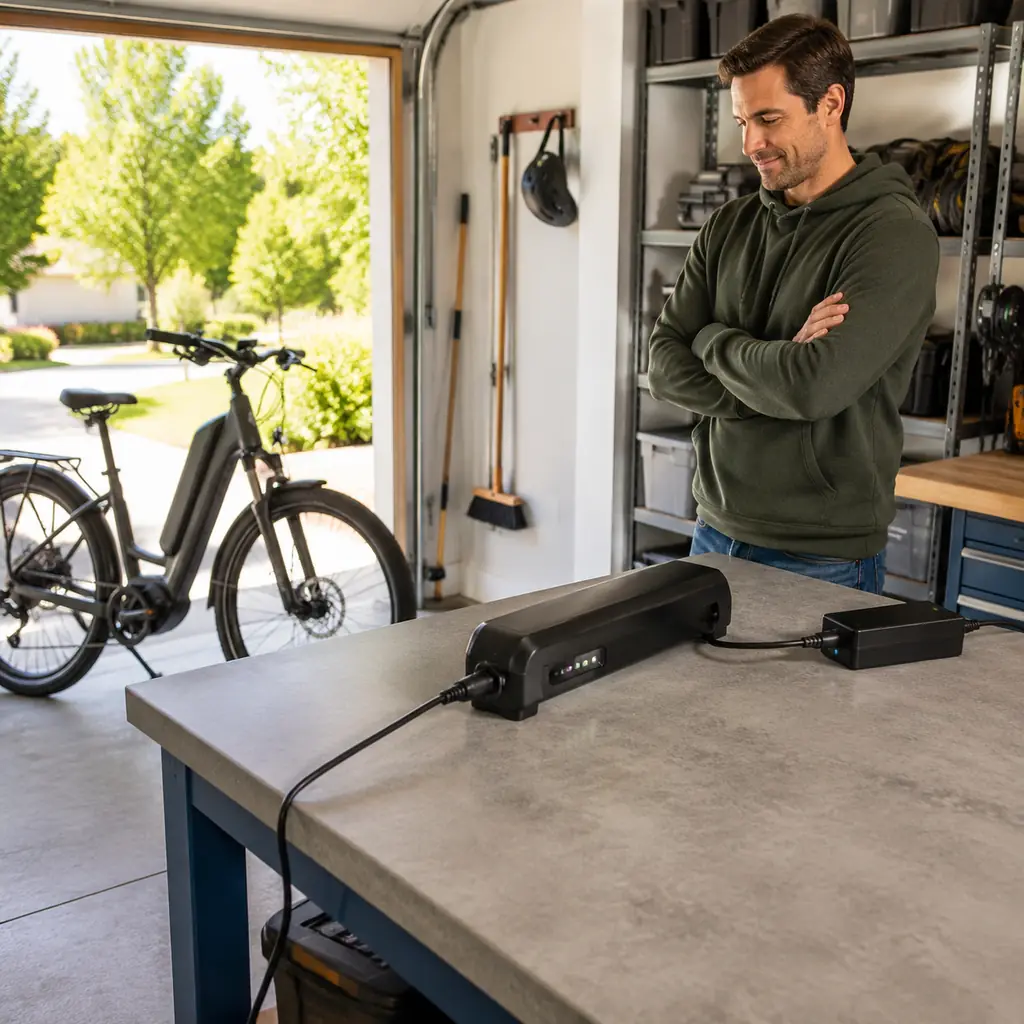
A plug that fits is not proof of electrical compatibility. The Consumer Product Safety Commission tells riders to use the charger supplied with the device or one recommended by the manufacturer.
Label chargers when several e-bikes share a home. Replace a damaged cord or charger through an approved source rather than using an improvised adapter.
19. Charging While Asleep or Away From Home
CPSC advises owners to remain present while charging micromobility products and never charge them while sleeping. A problem is harder to notice when no one is awake or home.
Charge in a place you can monitor. Follow the manual, disconnect when charging is complete, and make sure smoke alarms in the home are working.
20. Charging Near an Exit or on a Combustible Surface
A charger buried under clothing or placed beside a doorway creates avoidable risk. Soft material can also trap heat or allow cords to become damaged.
Use a stable, dry surface with clear space around the equipment. Keep the charging setup out of the exit path. Never cover the battery or charger while it operates.
21. Using an Unapproved Replacement Battery
A low-cost pack may not be designed to communicate safely with the bicycle’s charger and controls. CPSC recommends only replacement batteries approved as suitable by the device manufacturer.
Confirm the exact model and certification with the manufacturer or authorized shop. Saving money on an unknown pack is a poor trade when the battery sits inside a home.
22. Pressure-Washing the Battery and Connections
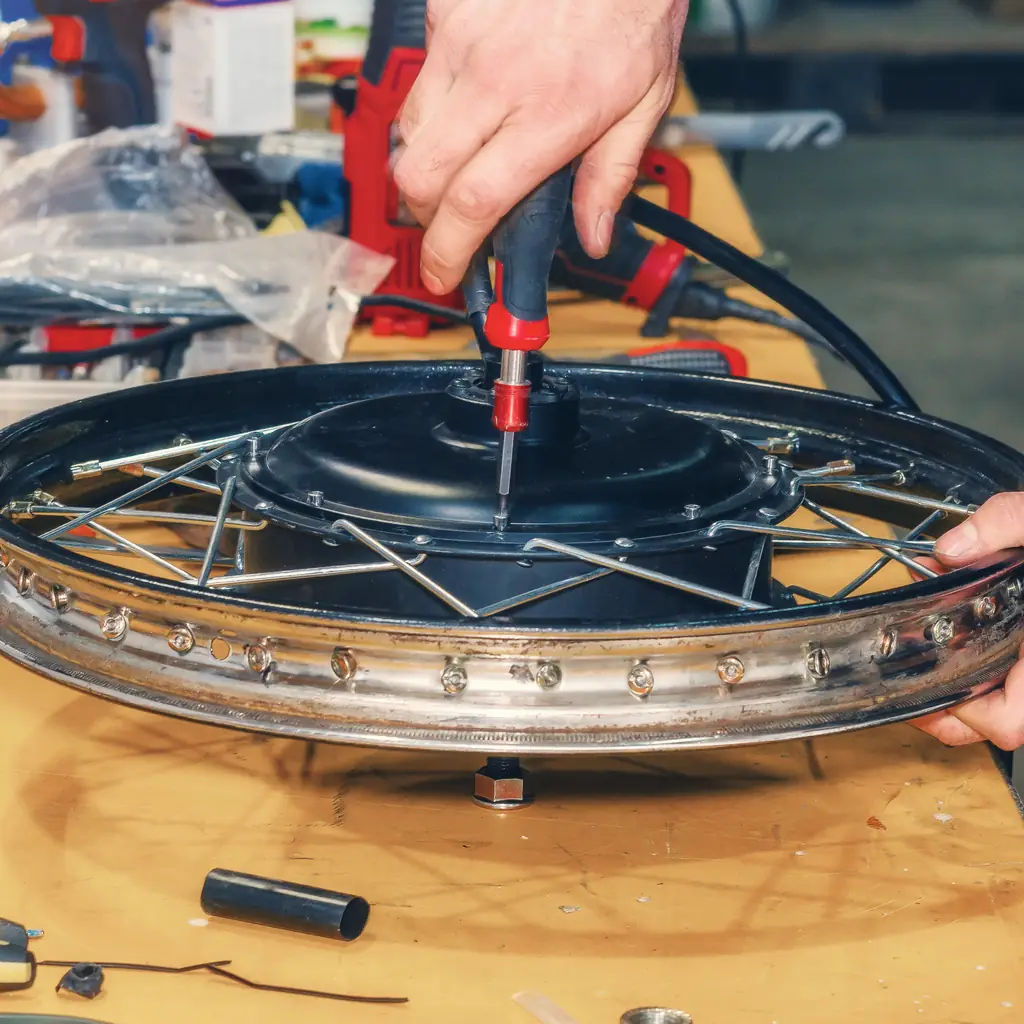
High-pressure water can drive moisture past seals and into electrical parts. Bosch specifically warns against high-pressure washing around its e-bike electronics.
Remove the battery if the manual directs, then clean with the approved method. A damp cloth and careful brush usually offer more control than a pressure washer. CTO’s rear-rack guide can also help keep luggage mounting points accessible for cleaning.
23. Ignoring Dirt Around the Mount and Charging Port
Sand, grit, or a poorly closed port cover can interfere with a clean connection. Forcing a plug into a dirty socket can damage a part that is expensive to replace.
Inspect the area in good light and follow the maker’s cleaning instructions. Never insert metal tools, spray unapproved chemicals, or grease contacts unless the manual specifically calls for it.
24. Riding With a Loose Battery
A removable pack that is not fully latched can rattle, interrupt power, or leave the bicycle on a rough section. Repeated movement may also wear the mount.
Listen for the positive latch and check for movement before each ride. If the lock or mount feels different, let a qualified shop inspect it. Do not pad the gap with improvised material.
25. Continuing to Use a Damaged or Recalled Pack
A dented casing, swelling, unusual heat, odor, leakage, hissing, or repeated charging error is not a range problem to “ride through.” Damaged and recalled lithium batteries can present a fire risk.
Stop using and charging the pack. Follow the manufacturer or CPSC recall instructions and use an approved battery-recycling or hazardous-waste route. Do not place it in household trash or ordinary recycling.
26. Assuming an E-Bike Battery Can Fly Like Normal Luggage
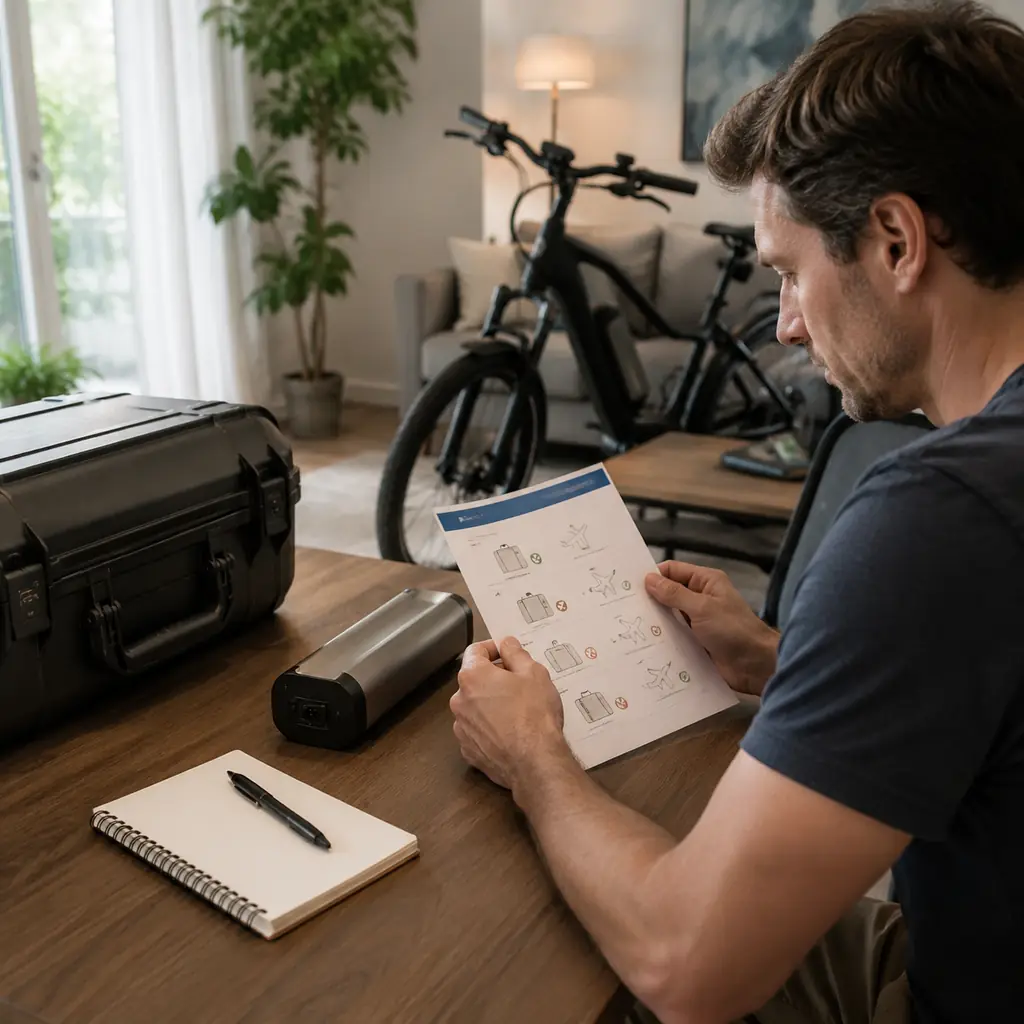
The FAA generally limits passenger-carried lithium-ion batteries to 100 watt-hours, with airline approval possible for certain batteries up to 160 watt-hours. Batteries above 160 watt-hours are forbidden in passenger baggage. Many full-size e-bike packs exceed that ceiling.
Check the watt-hour label and contact the airline before booking. Renting a battery or complete e-bike at the destination may be simpler. Never hide the battery inside a bicycle case.
27. Skipping the Owner’s Manual for Your Exact Drive System
Battery advice changes by brand, model, chemistry, firmware, and climate. Even reputable general guidance cannot supply the correct storage percentage, temperature limits, charger, and warning codes for every pack.
Download the current manual and save the support number. Pair those instructions with sound bicycle setup: CTO’s guides to touring tires, touring handlebars, and touring bicycles cover the mechanical side of a dependable trip.
Start With the Cheap Checks
Pressure, brake rub, chain condition, assist mode, route profile, temperature, and luggage can explain a surprising range change. Correct those variables before paying for a replacement battery.
When the battery itself shows a warning sign, stop troubleshooting at home. A qualified dealer can read system diagnostics and help determine whether the pack, charger, mount, or riding conditions caused the problem.
Sources
- U.S. Consumer Product Safety Commission: Micromobility Information Center
- U.S. Consumer Product Safety Commission: Battery Charging Safety
- Bosch eBike Systems: Factors That Affect Range
- Bosch eBike Systems: Battery Care and Maintenance
- Shimano STEPS: Battery Charger User Manual
- FAA: Airline Passengers and Batteries
About The Author
